
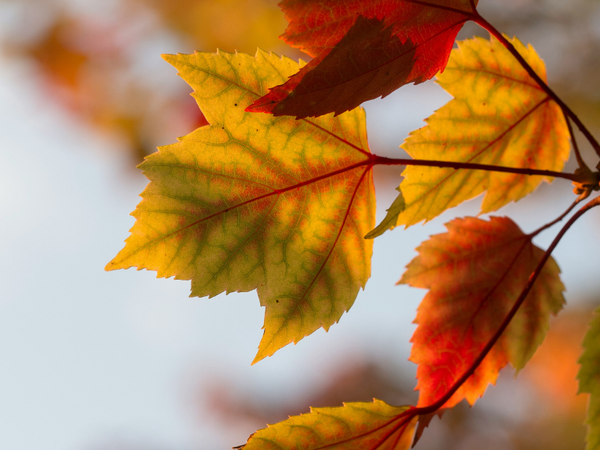
AUTUMN IS ON THE calendar, although not in the weather! Leaves on deciduous trees will convert from lush greens to vibrant oranges, reds and yellows (at least in some parts of the country) and then start their graceful descent to the ground as trees allow them to depart, preparing for new spring growth. In a way this can seem like an analogy for our spiritual life. Each of us must let go of certain attitudes, words and deeds, those not in harmony with Christ’s, for new spiritual growth to happen. God has always perfectly known and infinitely loved each of us without exception, understanding our strengths, weaknesses, virtues and sinful tendencies.
God deeply desires to work with each of us, drawing us to conversion, helping us shed our death-dealing actions and choices, especially through the Sacrament of Reconciliation, until we blossom in holiness. On Sept. 23, we celebrate the feast of St. Pius of Pietrelcina, more commonly known as Padre Pio. Born on May 25, 1887, into a poor family in Pietrelcina, Italy, Francisco Forgione was very prayerful as a child; by the age of five he already wanted to serve God. Admitted to the Capuchin Franciscan Friars Minor (O.F.M. Cap.) when he was 15, he was ordained a priest at 23. Six years after ordination he was assigned to a friary in the countryside outside San Giovanni Rotondo, where he remained until his death on Sept. 23, 1968, more than 50 years later. He is buried in the church of Our Lady of Grace in that same town. Pope (St.) John Paul II canonized him on June 16, 2002.
What was so exceptional about him that would cause his canonization a mere 34 years after his death, and which draws over seven million people annually to visit his tomb? Could it be the stigmata (the wounds of Christ on his hands, feet and side) which he received on Sept. 20, 1918, and which remained visible on his body until his death? Perhaps his mystical gifts, such as bilocation (able to be in more than one place at a time), physical healings and prophecies? Probably, although these were all gifts from God which he did nothing to earn.
His charity was phenomenal, especially in raising funds and founding a major hospital in 1956 to help relieve the sufferings of many. While relieving physical suffering is essential, relieving spiritual suffering through the sacrament of Reconciliation is of far greater import. Padre Pio would spend up to 15 hours a day hearing confessions and reconciling others to our merciful God, who gave him the gift of reading the hearts and souls of penitents. Thus, he helped prepare countless others to enter heaven.
For Your Family:
■ Attend Mass together on Padre Pio’s feast day.
■ Receive the sacrament of Reconciliation (go to Confession) soon.
■ Learn about his life (book or online) and become a friend of his. He is always ready to help you.
■ Pray and reflect on this advice from Padre Pio and share how it can help in your spiritual growth:
“Pray, hope and don’t worry. Worry is useless. God is merciful and will hear your prayer.”
“Prayer is the best weapon we possess, the key that opens the heart of God.”