
ONE OF THE foundational works of Christian literature, St. Augustine’s Confessions, opens with a meditation on gratitude and includes its most enduring line: “You awaken us to delight in praising you, for you made us for yourself and our hearts are restless until they rest in you.”
In this season of Thanksgiving and gratitude, our restless hearts can still look for the many ways we are blessed, even when it’s not easy.
According to Catholic author and Norbertine priest Fr. John Henry Hanson O. Praem., “gratitude can change your outlook. It helps you see reality as it is, and reality is more good than bad, always. These saints—Augustine, Teresa of Avila, and Josephine Bakhita—were able to recognize this in a very profound way, even with a lot of hardship mixed in.”
ST. AUGUSTINE OF HIPPO
Born in North Africa in 354 to a pagan father and Catholic mother, St. Monica, Augustine spent his first 32 years embracing worldly pursuits, including a life of pleasure. All his mother could do was pray. He eventually converted, became a priest, then bishop and went on to write a series of books that encapsulated Christian theology.
Not only was Augustine grateful for his conversion, but his mother was even more so; she said her life’s work was complete, took ill and died before they could return home to North Africa.
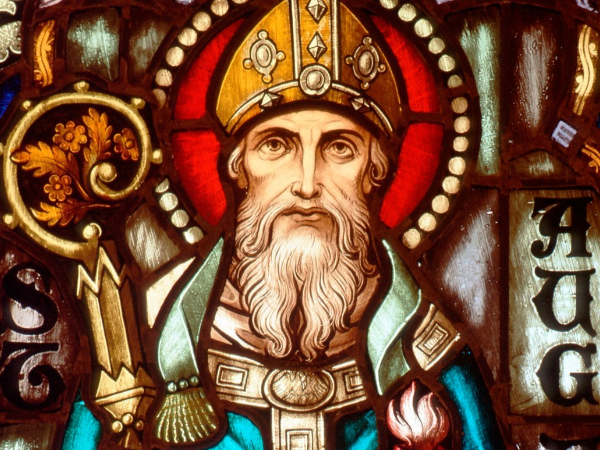
ST. AUGUSTINE OF HIPPO IS DEPICTED IN A STAINED-GLASS WINDOW IN CROSIER HOUSE IN PHOENIX. OSV NEWS PHOTO/CROSIERS
“A confession,” as St. Augustine wrote, “is a proclamation of faith in God’s greatness, goodness and glory.” When you open St. Augustine’s book, it reads like a gratitude journal, because praise is on every page.
Fr. John Henry explained that God’s mercy is inextricably tied to gratitude. Augustine presents gratitude as the natural and joyful response of the creature to the Creator’s gifts: our very existence, providence in our lives and redemption through the forgiveness of sins. Augustine said true gratitude means responding with love and praise rather than grumbling or contempt.
“It doesn’t mean that circumstances will not be oppressive from time to time,” said Fr. John Henry. “But it’s that even within those oppressive circumstances you can identify what is good, and even those saints who did suffer horribly were still able to find the good in their circumstances.”
ST. TERESA OF AVILA
More than a millennium after Augustine, St. Teresa was born in 1515 to an affluent Spanish family. During the Spanish Inquisition, her paternal grandfather was forced to convert from Judaism to Christianity or leave Spain; her father became a wealthy wool merchant, and she was raised by her mother to be a devout Christian. She was well educated and precocious; at age 7, she and her brother decided to run away to become martyrs fighting the Moors. Fortunately, her uncle found them and brought them home before they could come to harm. Teresa’s mother died when she was 14, and in her grief, she turned to the Virgin Mary’s spiritual motherhood. She eventually became a Carmelite nun, and in her initial zeal imposed so much mortification on herself that she became ill. While recovering, she encountered St. Augustine. Through reading St. Augustine’s work Confessions, she found a clearer understanding of God’s infinite mercy and gratitude as both a way of living and a spiritual requirement.
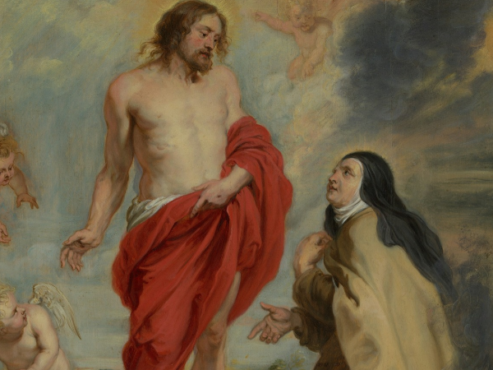
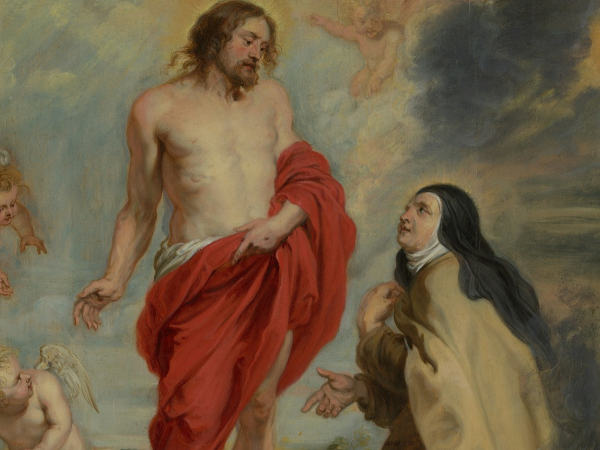
ST. TERESA OF AVILA INTERCEDING FOR SOULS IN PURGATORY, ARTIST: WORKSHOP OF PETER PAUL RUBENS (FLEMISH, SIEGEN 1577–1640 ANTWERP). METROPOLITAN MUSEUM OF ART, COURTESY OF UNSPLASH
According to Fr. John Henry, “Like Augustine, Teresa called herself a convert because, as a teen, she considered herself vain; she liked to dress up, wear perfume and go to parties. This continued for a bit, even after entering the cloistered convent. But one day, as she looked at a statue of the scourged Jesus, the Lord touched her heart. After that moment, her life became continual praise for how God had intervened in her life.”
A parallel exists between St. Augustine and St. Teresa. They had very different journeys and wrote very different types of books, but both share the same theme: how good and great God is, and how much we must be thankful to him.
ST. JOSEPHINE BAKHITA
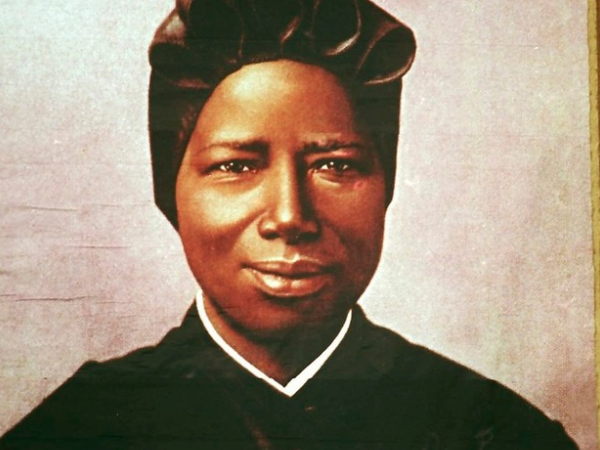
More than 350 years later, in Darfur, part of western Sudan, a seven-year-old girl was taken by Arab slave traders. She was given the name Bakhita, Arabic for lucky, and forced to walk hundreds of miles barefoot across the desert to be sold and resold as an enslaved person, beaten and subjected to ritual scarification. She eventually escaped to Italy and was introduced to the Catholic Church. She was finally freed and entered the Canossian Sisters.
What is remarkable about St. Bakhita’s story is that her deep gratitude grew from the darkest suffering of her life. She is sometimes called the Apostle of Gratitude.
“Bakhita identified profoundly with the man on the cross,” said Fr. John Henry. “They had similar scars. God’s mercy and grace led to her gratitude, despite her suffering.”
He continued, “At the end of her life, some of the sisters asked her what she would do if she met her Muslim captors. Remarkably, she said, ‘I would kiss their hands because without them I would never come to know the Lord Jesus,’” said Fr. John Henry.
Bakhita had such a supernatural view, despite her trauma. The trauma is still there, but as St. Paul said, “All the things I had considered to be gain, I now count as loss in view of knowing the Lord Jesus.”
Added Fr. John Henry, “We can’t be consistently grateful unless we’re looking at the world through the eyes of faith, and that comes from being close to God in daily prayer. There isn’t any way around that.”
So, this day and every day, count your blessings.