



KEEPING TRACK OF THE sacramental life of the faithful — births, marriages, ordination and deaths– is such an essential component of diocesan responsibilities that Canon Law requires bishops to maintain these records. Undoubtedly, without the Church’s record-keeping, genealogical research as a cottage industry would be much more difficult.
In Europe and the Middle East, ancient cathedrals, monasteries and particularly the Vatican, hold many of the written historical records of the modern era. Some of the oldest churches in the United States are Roman Catholic, with the Cathedral Basilica of St. Augustine dating to 1565, and the Basilica of San Jose in Puerto Rico established in 1528.
PHOTOS BY EVERETT JOHNSON
Our own Mission Basilica San Juan Capistrano was established in 1776. Still, it was not under the auspice of a formal diocese until 1840, when it was under the Diocese of Both Californias. In 1849, Alta California became the Diocese of Monterey. In 1922, the Diocese of Los Angeles separated from Monterey. Finally, in 1976, exactly 200 years after St. Junípero Serra established the Mission San Juan Capistrano, the Diocese of Orange separated from Los Angeles.
Compared to many other Catholic dioceses, Orange is in its infancy, yet it still has an archival lineage that includes a large part of local and state history.
Fr. Bill Krekelberg was appointed the first diocesan archivist. Although that wasn’t his training, he was an avid historian. He assembled everything from official papal documents, records of the establishment of Orange County parishes, to a moon rock that was gifted to the diocese. He passed in 2024, leaving behind 1,800 cubic feet of paper records, cultural objects, news clippings and memorabilia.
When Fr. Chris Heath was appointed archivist in 2021, he was taking on a considerable challenge.
“I had to figure out how to make it all work,” said Fr. Chris. “And I was concerned that I was doing it wrong.”
He added, “I was finally able to hire somebody who actually has a degree from UCLA in Archival Studies. When I laid out the collection to Daniella Mosqueda, I said, ‘Is this okay?’ Because the last thing I want is for someone to look at all this stuff and say, ‘What was he thinking?’ when I retire. I wanted to leave things in a better shape than I found them.”
Together, the two have been mapping a path to what will someday be a museum-quality diocesan archive. However, that requires time, money and a significant amount of learning.
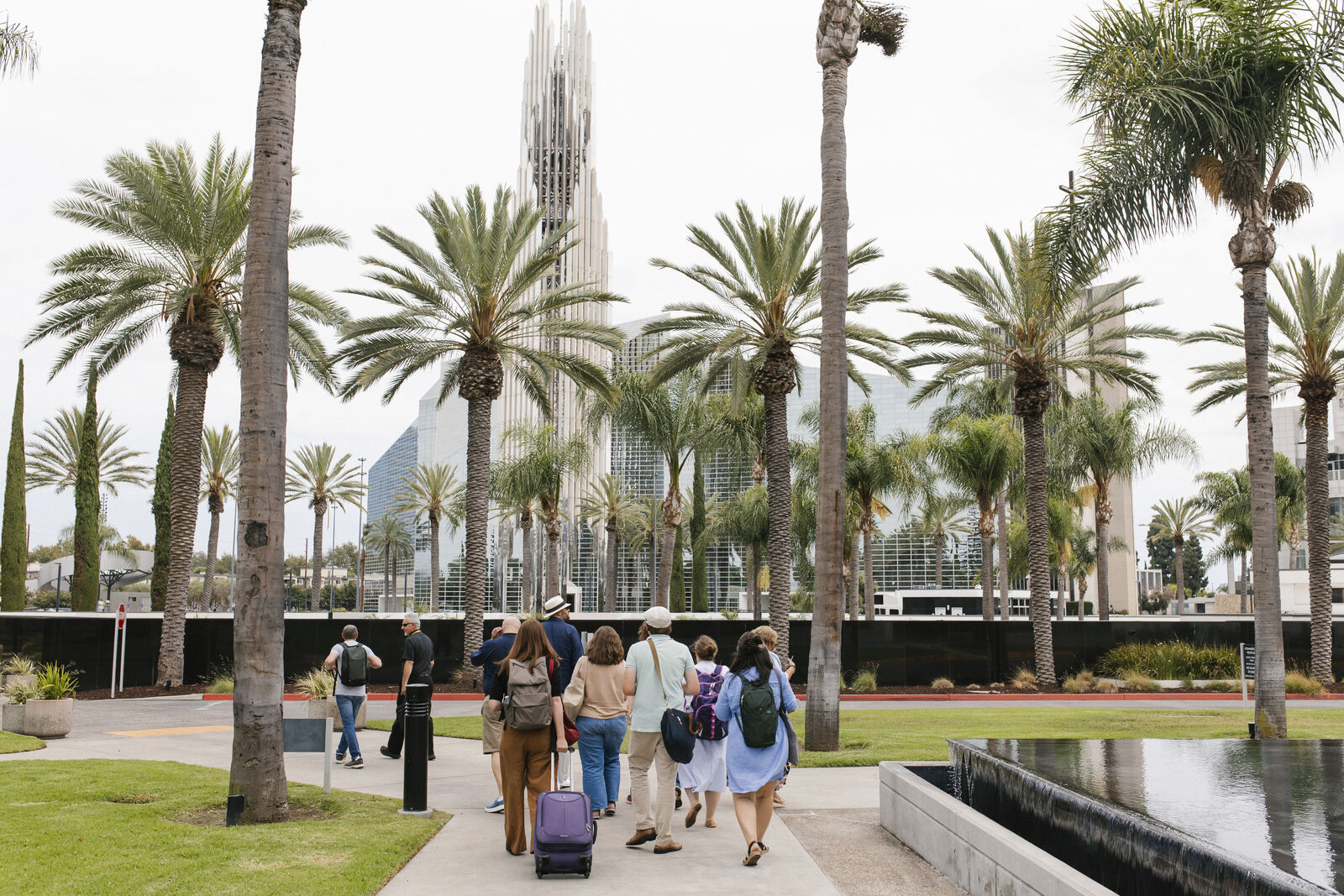
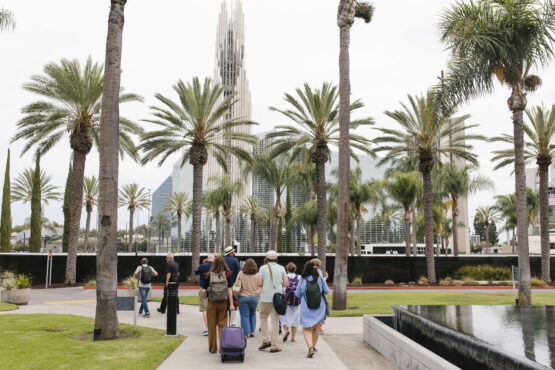
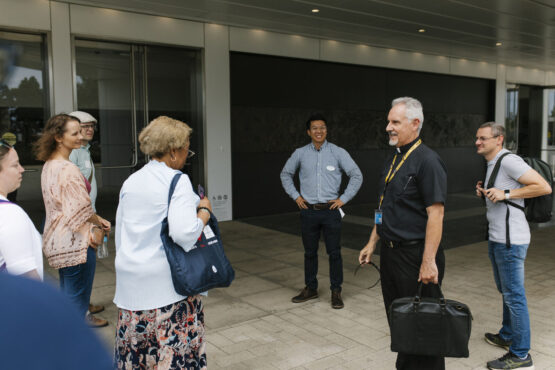
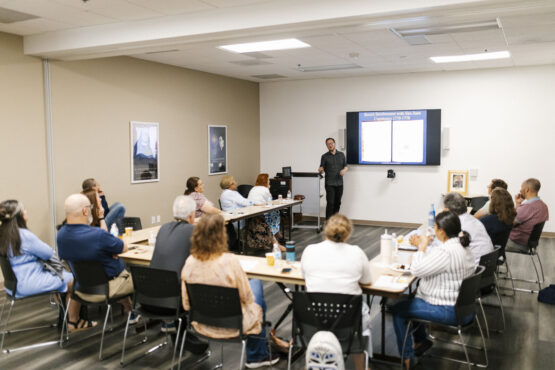
As providence would have it, the Society of American Archivists held its annual meeting at the Anaheim Hilton this summer, so Fr. Chris and Mosqueda seized the opportunity to learn more by inviting about 20 diocesan archivists from around the country to tour the cathedral on Aug. 28 and offer advice.
According to Fr. Chris, “This was a great opportunity to ‘pick the brains’ of our peers in other dioceses.”
He added, “We are also learning about how they collect, record and preserve history.”
With October being American Archives Month, the Diocese of Orange will join nearly 200 dioceses from coast to coast in celebrating its history and the significant impact it has had on the American story.