
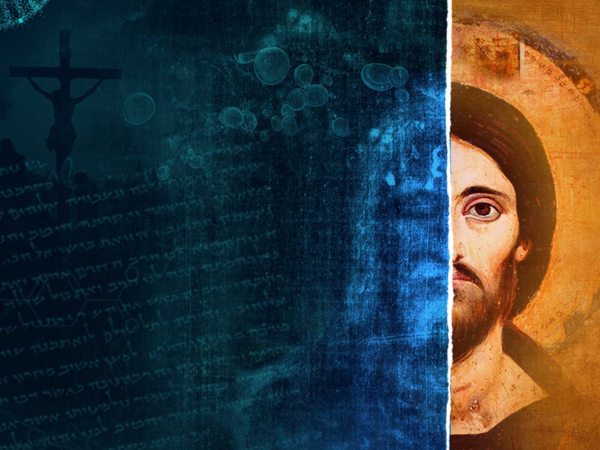
A MUSEUM DEDICATED TO one of the world’s most studied artifacts — the Shroud of Turin, purported to be the actual burial shroud of Jesus Christ — is coming to the Christ Cathedral campus this fall.
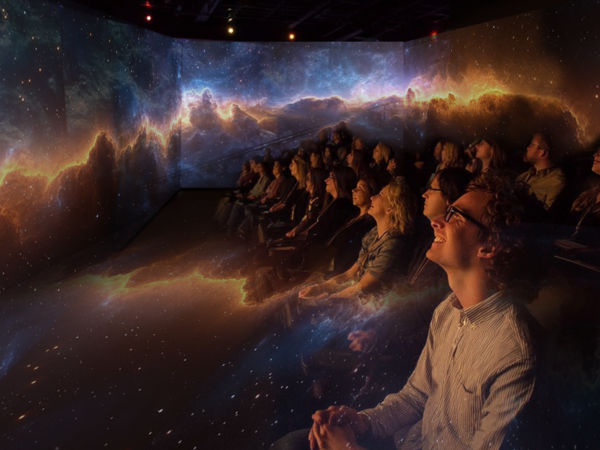
Spread over 10,000 square feet and featuring a series of 360-degree theater rooms, interactive displays, new sacred art and other exhibits, the groundbreaking “The Shroud of Turin: An Immersive Experience” will present compelling information about the artifact, which has been the source of numerous scientific studies and debate for decades. The evangelistic encounter will also tell the story of the birth, life, Death, Resurrection and Ascension of Jesus — and of His ongoing real presence in the Eucharist.
“The Shroud of Turin: An Immersive Experience” opens to the public on Nov. 19. General admission tickets are $20. Seniors and students are $15. Entry will be timed. The entire experience is estimated to last between 90 minutes and two hours.
The museum will be open seven days a week inside the Richard H. Pickup Cultural Center. The museum’s construction and creation were privately funded by generous donors.
For more information and to buy pre-sale tickets, visit TheShroud Experience.com
“‘The Shroud of Turin: An Immersive Experience’ at Christ Cathedral will prove to be an encounter with Jesus that’s never before been experienced,” said Terry McGaughan, president of the Resurrection Center at Christ Cathedral, the nonprofit funding and operating the museum. “This personal encounter with Christ will engage audiences, spark curiosity and encourage contemplation on the spiritual and historical significance of Jesus. Through the Shroud, we draw upon scientific evidence, Sacred Tradition and doctrines of faith for the visitor to engage in a visual gospel supporting the truth of Jesus and His Resurrection.”

“The Shroud of Turin: An Immersive Experience” is being presented by the Diocese of Orange in conjunction with Othonia, a Rome-based consortium of Shroud experts affiliated with the Pontifical Ateneo Regina Apostolorum educational institute.
“Othonia is excited to partner with the Diocese of Orange to realize this immersive museum,” said Nora Creech, director of North America for Othonia. “The focus of this experience on the Resurrection and Jesus’ ongoing presence in the Eucharist is perfectly paired with the soaring architecture of the Christ Cathedral campus. This will be Othonia’s flagship museum, designed to introduce an entirely new audience to the Shroud in an engaging and memorable way and with the ultimate goal of making Jesus known through the Shroud.”
Among the sacred treasures of the museum will be two detailed replicas of the Shroud of Turin. Like the actual Shroud kept in Turin, Italy, the replicas will be 14 feet by 3 feet. One will be made of archival cotton canvas, allowing visitors to view the complex array of features in high definition, including the mysterious body image, blood stains, burn marks and water damage. The second replica is a backlit LED version that shows the details on the Shroud with significant clarity for visitors to examine.
Another highlight of the museum will be a newly commissioned 6-foottall bronze sculpture of Jesus made by Italian artist Luigi Enzo Mattei, who is also noted for creating the Holy Door of the Basilica of St. Mary Major in Rome. The sculpture is a faithful attempt to re-create Jesus’ body based on the evidence left on the Shroud of Turin. It relied on calculated measurements and incorporated the injury marks of Christ’s Passion and Crucifixion.
The Shroud of Turin is universally considered to be among the most studied artifacts in the world, and for good reason. It is believed by some to be the actual linen burial cloth placed on the body of Jesus Christ after His Crucifixion, a practice common among the 1st-century Jewish people at the time. Interest in the Shroud is so prolific that there is a name for the formal study of it: sindonology.
The Catholic Church has not taken an official position on the Shroud of Turin’s authenticity but recognizes its importance as an object of veneration and reflection.
The Church acknowledges the ongoing scientific investigation into the Shroud’s origins and properties, entrusting scientists with the task of finding satisfactory answers to questions surrounding it.
Popes have consistently recognized the Shroud’s significance as a powerful image that points to the Passion and Death of Jesus, inviting believers to deeper contemplation and conversion.
The original Shroud — kept in preservation and not currently on display — has been in the formal possession of the Holy See since 1989. Its history prior to 1354 is not well-documented. Its name is derived from its longtime home in Turin, Italy, where it has been since 1578. It was first photographed by Secondo Pia in 1898, an effort that first uncovered the startling face of a man whose features are consistent with traditional depictions of Jesus of Nazareth.