
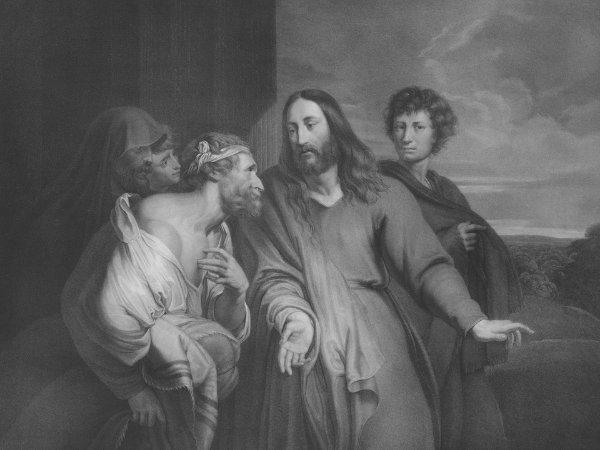
THE PARABLE OF THE RICH man and Lazarus makes many of us uneasy. Again, Jesus calls us to see truth and act upon it while there is still time. Our desire to be masters of our own lives conflicts with dependence on God. Once known, the hard teachings of Jesus if ignored become a stone in our shoe, irritating our conscience.
This parable highlights the gulf between lavish wealth and abject poverty and their eternal consequences. Yet it is not simply about earthly riches but how we use whatever wealth we have —our time, talents and treasure. Neither riches nor poverty guarantee heaven or hell. What matters is whether we cling to false gods of self-indulgence or embrace the true wealth of love for God and neighbor.
This is the only parable where Jesus names a character: Lazarus, while the rich man remains anonymous. Jesus wants us to understand that the poor are not a soulless class devoid of identities but unique
persons, each made in God’s image. Poverty is not only about lacking possessions, just as wealth is not always measured by money. That selfishness that destroys hearts can live in anyone. The rich man’s sin was not his wealth but his indifference. He knew Lazarus by name, saw him suffering daily at his gate, and yet did nothing, hardening his heart. That indifference became the chasm that separated him from God. Lazarus, mean-while, was not saved by his poverty but by his trust in God in the midst of suffering. Here Jesus rejects the so-called “prosperity gospel” that equates success with God’s favor.
This parable is about values — aligning ourselves with Jesus’ concern for those physically and/or spiritually impoverished. The rich man’s failure was not ignorance but deliberate neglect. All of us have access to Moses, the prophets and Jesus. Do we apply their teaching to those lying at our “gates.” Jesus calls us to move from the abstract to the personal, to recognize faces and attach names that demand our compassion.
Wealth and poverty often exist side by side in our communities. Jesus challenges us to encounter poverty in its many forms: addiction, loneliness, hatred,
discrimination, violence, materialism and broken relationships. These are signs of spiritual poverty as real as Lazarus’ sores. The rich man’s spiritual blindness kept him from seeing what God asked of him. So too, our decisions and priorities map the path toward our eternal destiny. The gates we leave closed today may become eternity’s unbridgeable abyss. The divisions in our world—between haves and have-nots, aces, religions, citizens and strangers—are not just happenstance. They result from what we harbor within us, from the inside out. But while we live, gates can be opened through love, mercy, compassion, forgiveness and reconciliation, breaking the false credo that for me to succeed, win and be rich, someone else must lose, fail and be poor. True wealth is found only in communion with God and neighbor.
Most of us are both rich man and Lazarus—rich in some ways, impoverished in others. Yet all of us stand before the same choice. How we treat others, especially the marginalized—the Lazarus at our gate—has eternal consequences. Jesus reminds us: “What you did not do for one of these least ones, you did not do for me” (Mt 25:45).
So, who is Lazarus in your life? Perhaps a wayward child, an addicted friend or someone suffering whom Isaiah described as one “from whom you turn your face” (Is 53:3). Each lies at our gates. The road to heaven begins at the intersection of ability and opportunity through the opened gates of our hearts.