
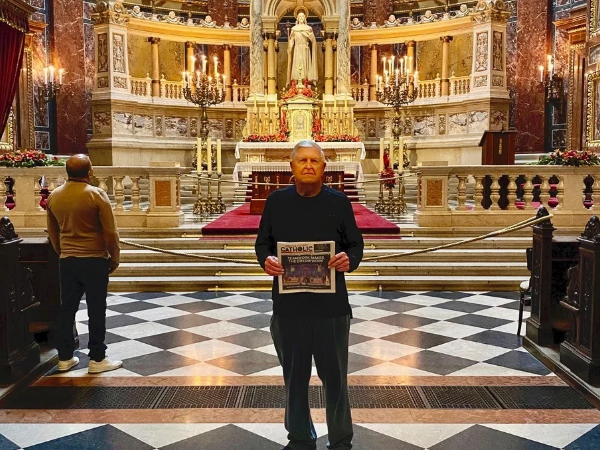
HE SPENT 90 MINUTES sitting alone in the pew, reflecting on his family’s tumultuous past.
Fred Tarnay had returned to the church where he was baptized in 1938.
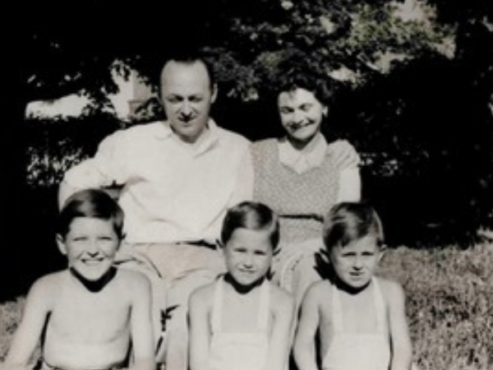
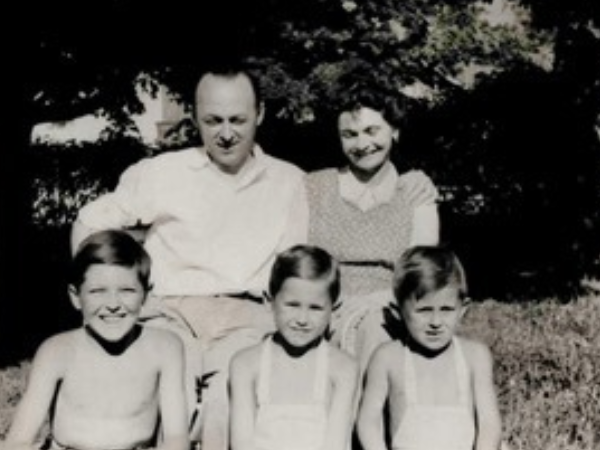
THE TARNAY FAMILY IN 1947. PHOTOS COURTESY OF FRED TARNAY
He still can recall sitting next to his father during Masses at St. Stephen’s Basilica in Budapest, Hungary.
Tarnay and his family were able to escape their homeland in 1945, as Soviet forces occupied Hungary in the final stages of World War II and the country began its transition to communist rule. Tarnay, the oldest of Frederick Sr. and Katherine Tarnay’s three sons, was 7 years old at the time. By the summer of 1949, when Hungary officially became ruled by a one-party communist dictatorship, many of his extended relatives had disappeared or had died.
“I felt a sense of enlightenment,” Tarnay recalled of sitting in the pew following the collapse of the Iron Curtain in 1989 and the dissolution of the Soviet Union in December 1991. Since that day, Tarnay – an 88-year-old parishioner at Holy Trinity Church in Ladera Ranch –has returned several times to St. Stephen’s Basilica.
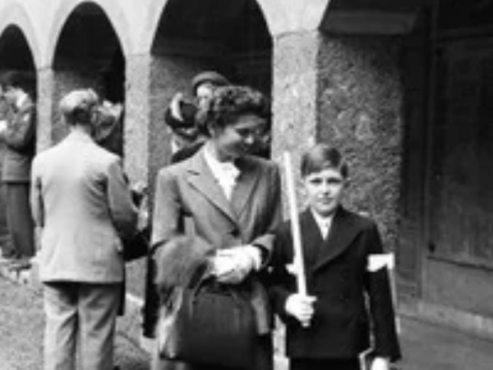
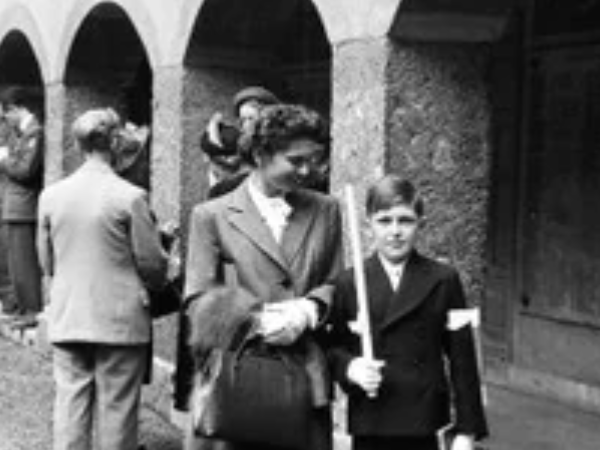
FRED TARNAY ON HIS FIRST HOLY COMMUNION AND CONFIRMATION DAY IN 1946.
He’s now working on a book about his life. Tarnay is well aware that he is but one of countless displaced World War II-era Europeans with stories that could fill the shelves of several libraries. Through it all – his family’s escape from Hungary, their wanderings in a war-torn world, surviving for several years without a country or without a home, and facing seemingly difficult or impossible situations – Tarnay said there was one constant: His faith.
“God is real,” Tarnay said. “Who else do you go to when you have nothing?”
THE CATHOLIC NETWORK
The Tarnays escaped to Austria. Despite facing their own hardships in the midst of the ruins of war, Tarnay’s parents often put the needs of others ahead of their family’s needs. They joined Caritas Internationalis, the global Catholic relief organization, and helped funnel medicine, food and clothing to those in the direst need. After five years, the Tarnays were accepted into a refugee program and with help from friends from Caritas, they were able to find a sponsor and emigrate to the U.S.
Aided at critical times by a network of fellow Catholic lay and clergy members and sisters that he compares to the Underground Railroad, Tarnay and his family eventually settled in Altadena via Boston. Prayer kept them going.
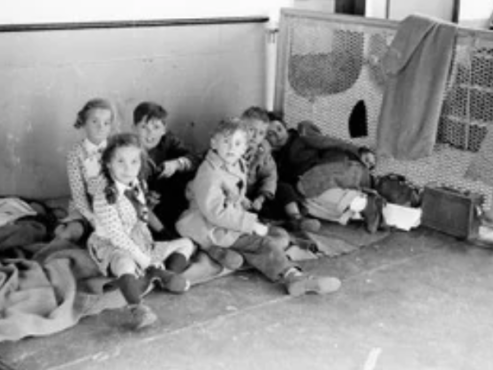
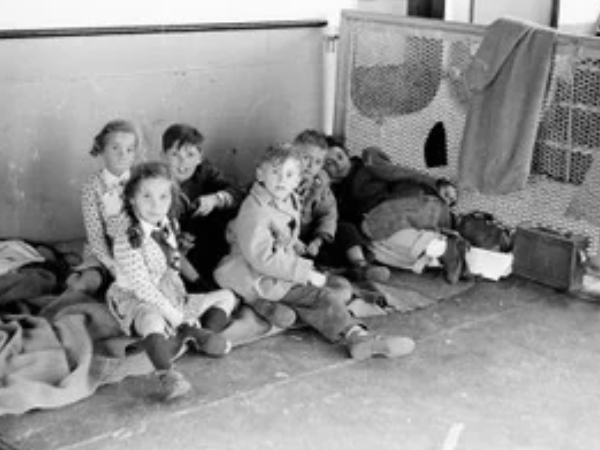
THE TARNAY FAMILY ON THEIR WAY TO BREMERHAVEN TO BOARD FOR A TRIP TO THE U.S. PASSENGERS COULD NOT STAY BELOW DUE TO LEAKING OIL AND FUMES SO THE FAMILY SPENT EIGHT DAYS ON DECK, FINDING A CORNER TO LIVE IN.
“We never counted on hope—we never even thought about it,” said Tarnay. “We always looked far beyond the situation we were in; we accepted and worked through our current fate, never felt sorry for ourselves, and never stopped reaching, looking far to see what was ahead.
“And we knew God was always there. We asked for and received His help, but He also demanded action on our part. Our mother’s favorite prayer was, ‘Lord, just give me the strength to do your will to get through this and show me the way.’”
HIGH SCHOOL AND COLLEGE YEARS
After landing in Southern California, and with help from the Archdiocese of Los Angeles, Tarnay’s parents found work doing maintenance and cooking at a downtown L.A. church. Tarnay and his two brothers had to spend time at an orphanage because there wasn’t enough room for them to live with their parents in the church rectory. Eventually, all three boys graduated from Loyola High School and attended college.
Tarnay met his wife, Sharon, through the Newman Club, a Catholic campus ministry organization, while majoring in physics at Cal State Los Angeles. After taking graduate school courses in physical optics at UC Irvine, Tarnay enjoyed a career working as an engineer in the aerospace industry.
HIS SECOND BOOK
Tarnay, a longtime parishioner at Holy Family in Orange before he moved to a retirement community in south Orange County six years ago, lost Sharon to cancer in 2010. Among the items the 67-year-old left behind was a collection of 30 rosaries. But Tarnay’s two brothers live in Southern California as do three of his four daughters and his six grandchildren. The book he’s working on, which heavily relies on documents and personal letters his mother kept and wrote, is his second. He and his brother co-wrote “A Carpathian Folk Song: Freedom, Love, Gold,” a 304-page historical nonfiction book published in 2013 that chronicles the family’s experiences during the final, chaotic days of World War II in Hungary.
Frederick Tarnay Sr. played a key role in successfully protecting a train carrying 32 tons of the Hungarian Treasury away from advancing Soviet forces and the Nazis. At one point, he braved 70 miles across active enemy lines to deliver a secret letter to the Allies, eventually reaching Gen. Patton’s army to save the treasury. His recognition is growing in Hungary as a hero amid the post-WW II chaos. Perhaps during that harrowing journey more than 80 years ago, Frederick Sr. – who died when Tarnay was in high school – kept in mind one of the key lessons his son says life has taught him.
“The way is always to ‘look beyond the horizon’ and then with the grace of God, it will always be there,” Tarnay said. “‘Look beyond the horizon’ as far as you can see. God will be there for you.”